Package Hub

Self-service logistics system across residential and OXXO retail environments.

Role

UX/UI Designer

Timeline

2023 - 2025

Industry

Logistics / Last-mile delivery

Scope

Mobile · Smart Lockers · Operations

Overview

Designing a self-service logistics system across physical and digital touchpoints

The project focused on redesigning how packages were received, stored, retrieved, and managed across residential, retail, and operational environments.

Rather than treating the locker, customer app, courier tools, and operational dashboards as separate products, I designed them as parts of the same service flow. A package could move from warehouse and courier operations to a physical locker and finally into the customer’s hands, with each interface supporting the same journey.

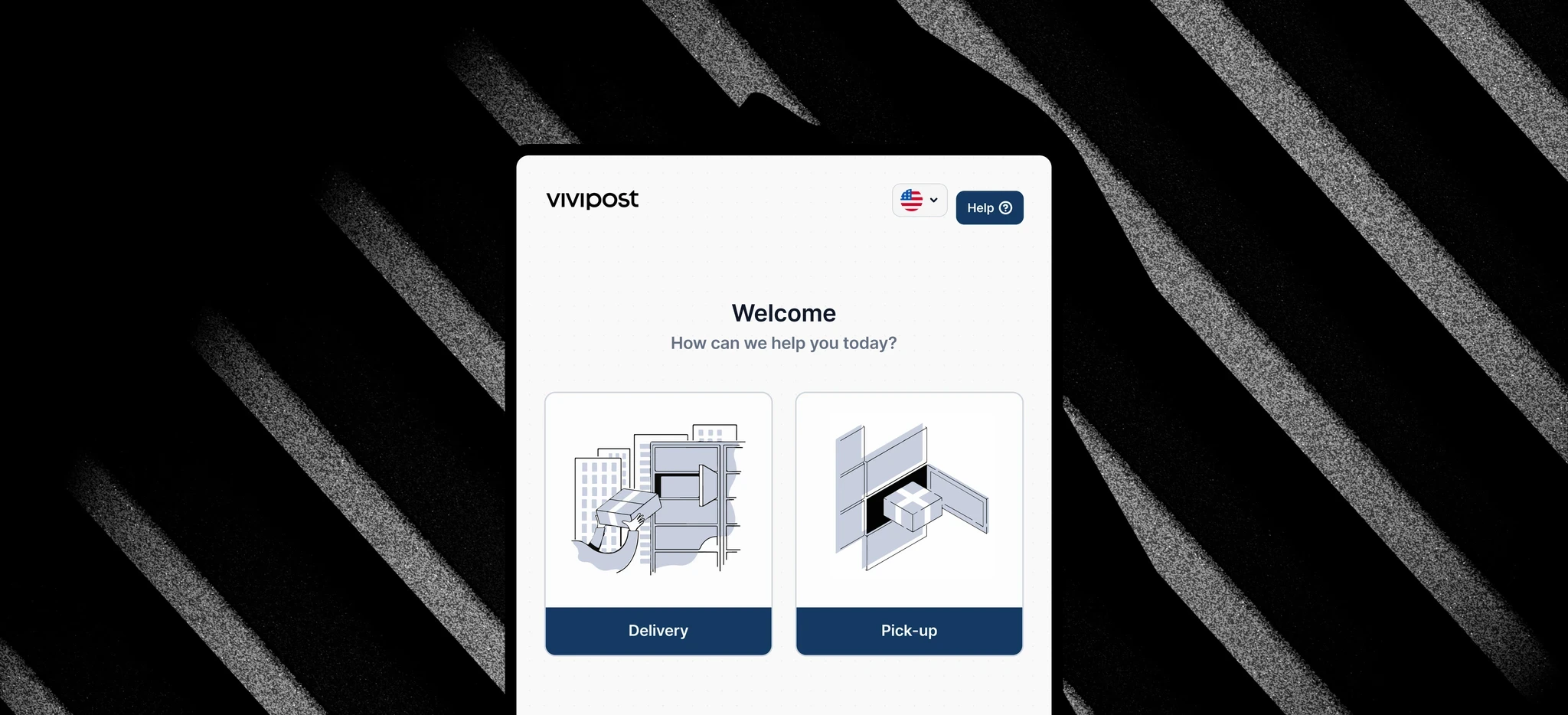
The system connected smart lockers, customer experiences, courier workflows, warehouse tooling, and operational dashboards, supporting package retrieval, secure handoffs, tracking, and operational visibility across residential and retail environments.

The goal was broader than making package retrieval easier: it was to reduce friction across the full last-mile experience for both customers and the teams operating it.

Designed around operational

constraints, not ideal scenarios

Challenges

Reducing operational friction across high-density delivery environments

Traditional package handling relied heavily on manual coordination between guards, couriers, staff, and residents. As delivery volume increased, bottlenecks, misplaced packages, and limited visibility became increasingly difficult to manage.

The challenge went beyond the locker itself. A single delivery could involve warehouse operations, courier handoff, physical storage, customer retrieval, and operational follow-up, all handled by different people, tools, and environments.

The system needed to keep those handoffs secure, traceable, and easy to understand without adding more work to already busy operational teams.

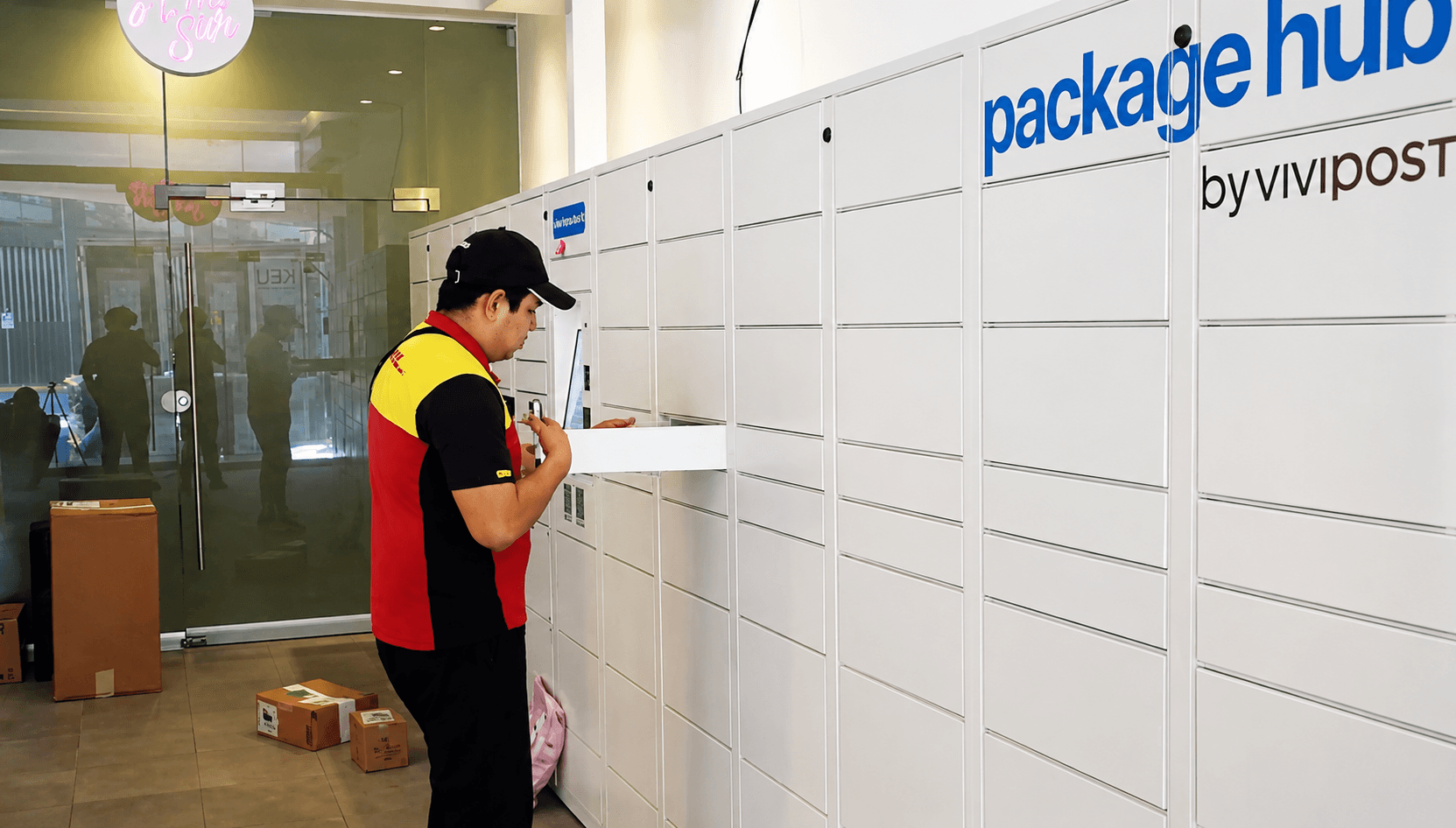
Locker deployment in San Antonio, Texas, part of a network spanning residential and retail environments across Mexico and the U.S.

System context

Coordinating one delivery across multiple actors and systems

Package Hub was not a single interface. I had to design how one package moved through a network of residents, couriers, retail staff, warehouse operators, and administrators, each interacting with different tools at different moments.

That meant defining handoffs and shared states across smart lockers, customer applications, courier workflows, warehouse tooling, and operational dashboards, so every actor could understand where a package was, what had happened, and what they could do next.

Detail from a larger service flow mapping returns across customer, retail, courier, warehouse, and operational systems.

Key decisions

Designing operational simplicity across complex logistics workflows

I focused on a small set of product decisions that could simplify the experience across lockers, customer-facing products, and operational tools, without losing the controls each environment required.

QR first retrieval reduced

friction significantly

QR-first retrieval

Scanning a QR code became the fastest path into high-frequency locker flows, while PIN entry remained available as a fallback when scanning wasn’t possible.

Self-service by default

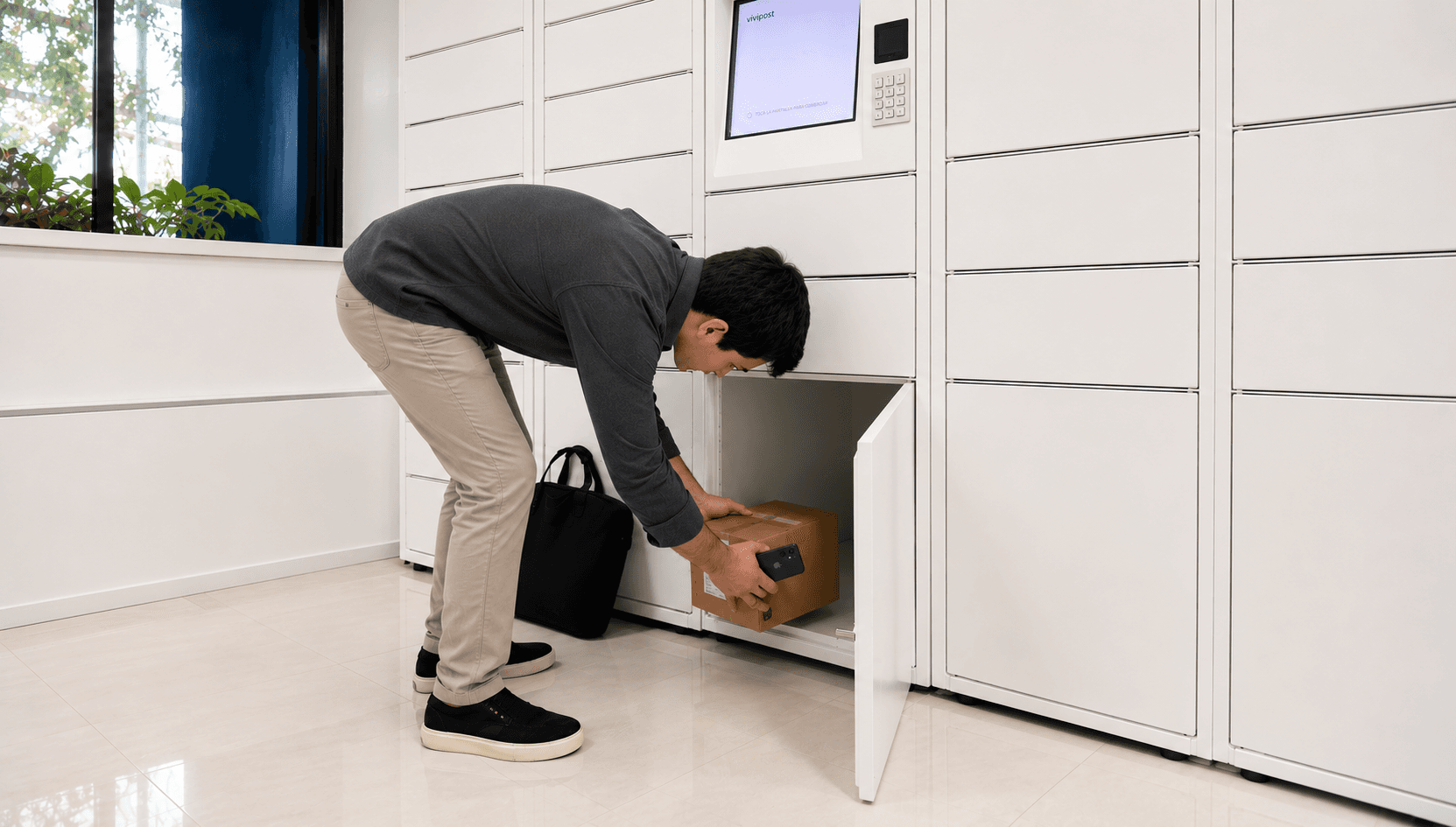
I designed the core locker flows to work without staff assistance. Couriers could deposit packages independently and customers could retrieve them without relying on guards or store employees.

Human intervention became the exception rather than part of the default flow.

Prioritizing critical flows

Rather than expanding every use case at once, I prioritized the workflows with the highest operational value: package reception and retrieval first, followed by returns and outbound shipping.

This gave the system a stable core before introducing additional operational complexity.

Operational visibility

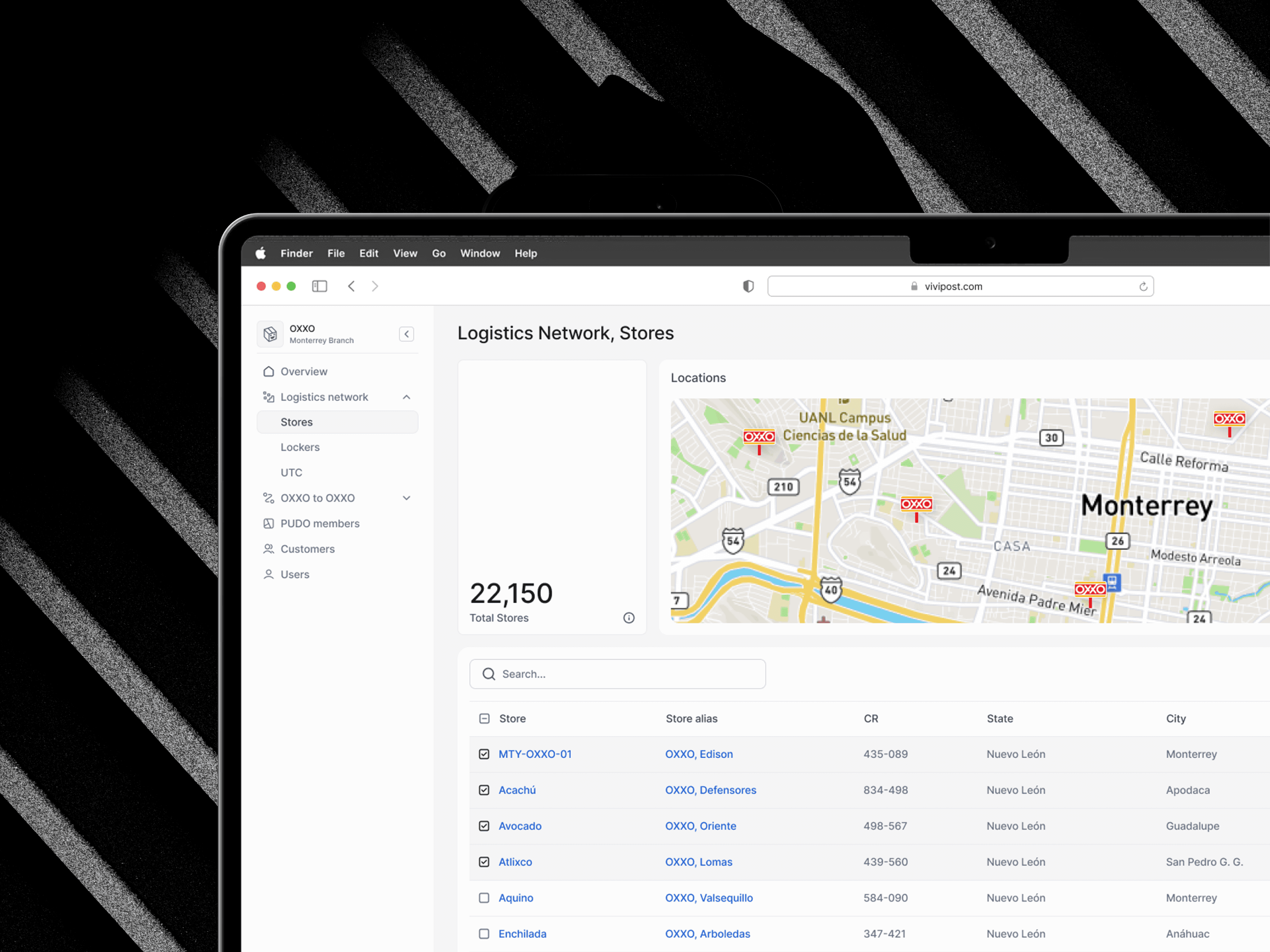
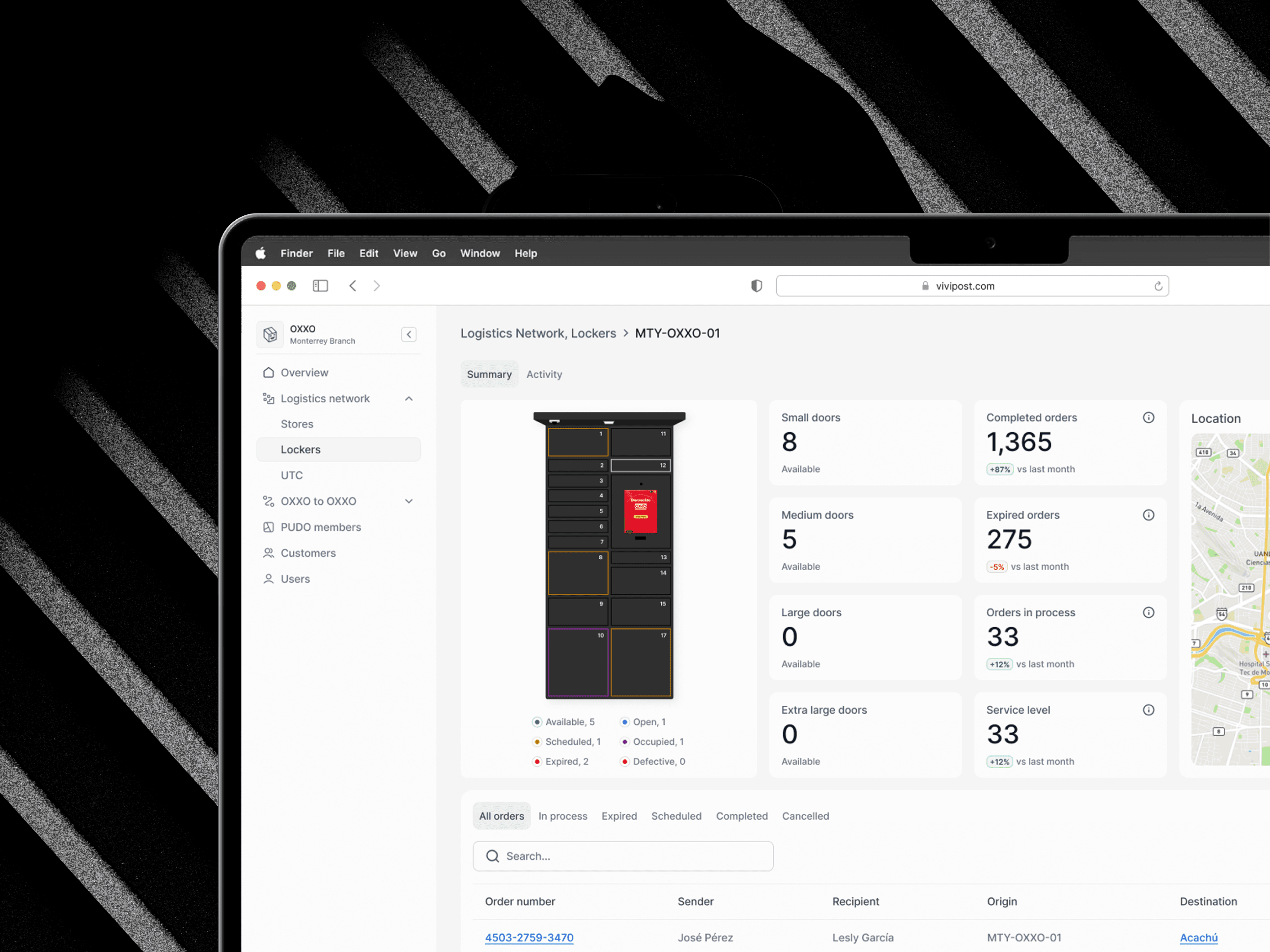
Operational teams needed to understand what was happening without tracing packages across separate tools. I centralized package status, locker monitoring, activity history, and audit information into a shared operational view.

Designing for scanability

Operational dashboards often had to communicate a large amount of information at once. I used hierarchy, grouping, status cues, and progressive detail to make high-priority information easy to scan without removing depth.

The core interaction model held up through the OXXO integration

As Package Hub expanded into OXXO’s retail ecosystem, I worked with their design team to adapt the experience to established retail patterns and requirements while preserving the core flows and interaction logic.

The experience was also designed to support a planned integration with the miOXXO app (now Spin Premia), extending package interactions into OXXO’s existing customer ecosystem.

Core workflows

Following a package through the service lifecycle

Core workflows connected the physical locker experience with the systems used to receive, track, retrieve, and investigate every package along the way.

Built for high frecuency

daily usage

Package reception

Couriers could authenticate, register a package, and assign an available locker without relying on store or building staff.

Package retrieval

Customers received a notification, authenticated through QR or PIN, and were guided directly to the compartment holding their package.

Locker-level monitoring

Operations teams could monitor package status, locker capacity, active orders, and exceptions from a shared view instead of piecing information together across separate workflows.

Historical tracking and auditability

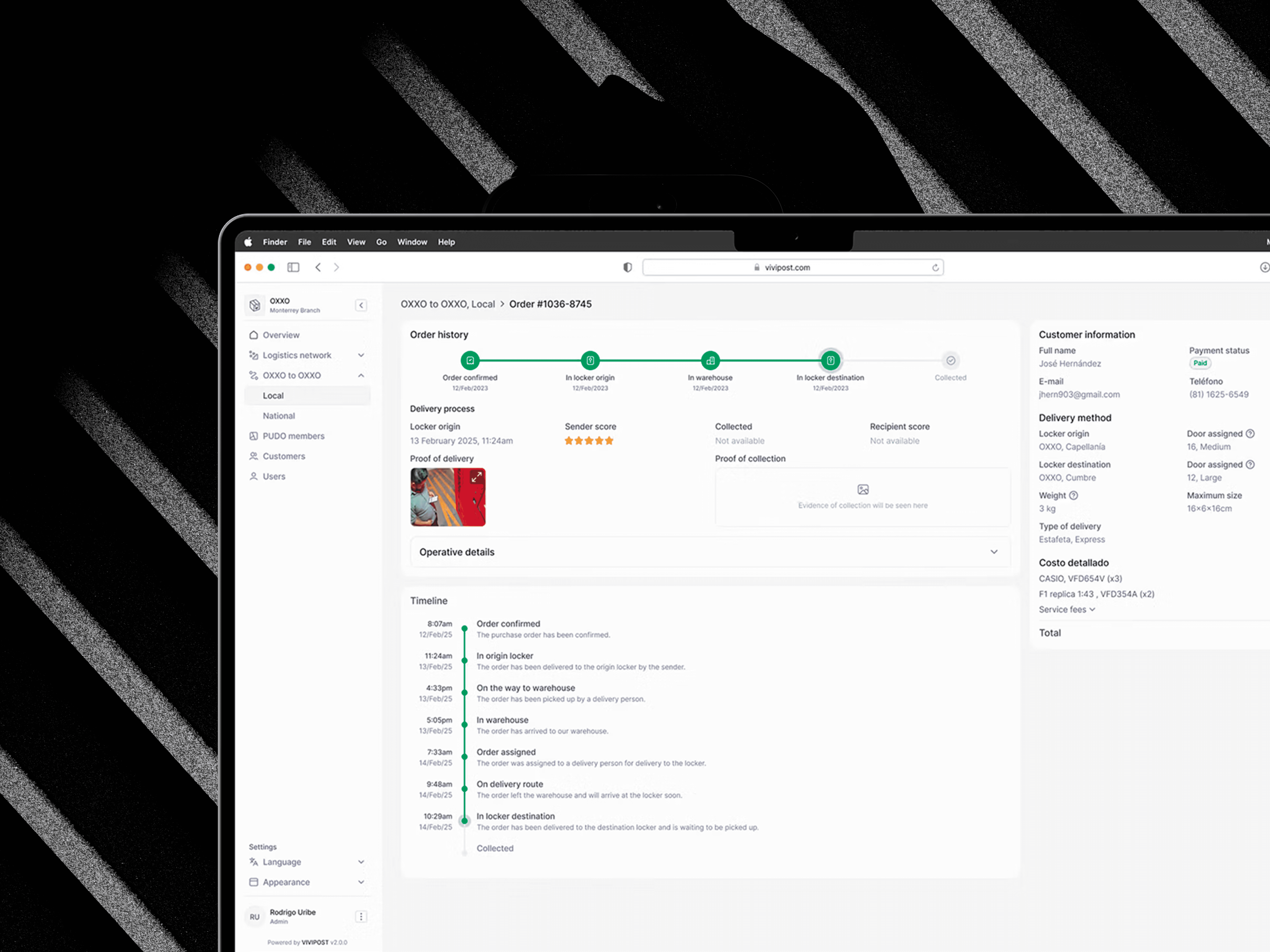
Each package kept a traceable history of handoffs, timestamps, locker events, and proof of delivery, giving operations a clear record when something went wrong.

Impact

Measurable impact across customer and operational workflows

Across residential and retail deployments, the platform handled tens of thousands of packages, with measurable results across adoption, delivery reliability, operational efficiency, and task completion times.

34k+

34k+

Packages processed

~80%

~80%

First-month adoption

94%

94%

Successful delivery rate

Optimized through

real world usage patterns

Optimized through real

world usage patterns

66%

66%

Reduction in manual handling

27

27

seconds

Average package retrieval

42

42

seconds

Average package drop-off

Optimized through real

world usage patterns

Together, these metrics reflected a system being used at meaningful scale while keeping its most frequent customer and courier interactions fast and reliable.

Industry recognition

The work received external recognition through industry coverage and the Premio Tecnos Nuevo León 4.0.

Featured in Last Mile Prophets with Marek Rozycki, former VP of Amazon Logistics Europe, discussing out-of-home delivery in Mexico.

Received the Premio Tecnos Nuevo León 4.0 for the project’s approach to package delivery across retail environments.

Takeaways

Designing beyond the interface

Package Hub changed how I think about product design. The hardest problems weren’t contained in a screen, they appeared in the handoffs between software, people, physical infrastructure, and real operational constraints.

Three lessons stayed with me:

  • Real-world behavior matters more than ideal flows
    Couriers, residents, guards, warehouse teams, unreliable scanning conditions, and physical environments constantly challenged the “perfect” flow. Designing for the exceptions was often as important as designing the happy path.

  • Physical interactions need physical prototypes
    Static screens weren’t enough to understand interactions involving QR codes, lockers, distance, timing, and movement. Prototyping realistic flows in ProtoPie helped me evaluate how interactions actually felt before they reached a real deployment.

  • The best solution is not always another interface
    Working across logistics and physical environments taught me to question where the experience should live in the first place. Sometimes the right answer was software, sometimes automation, and sometimes rethinking the physical service itself.

The biggest lesson was learning to design the service around how the system actually behaves, not how the interface assumes it will.

Jordi Almanza, 2026

Crafted with intention

Designed and built in

Monterrey, MX